


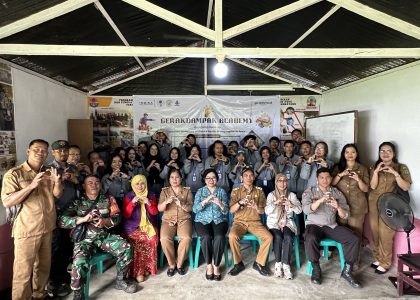
The workshop on Women- and Child-Friendly Villages (DRPPA) was successfully held as an effort to enhance understanding, participation, and commitment among various stakeholders in creating an inclusive village that is women-friendly and child-supportive. This activity serves as a follow-up to the women’s deliberation previously conducted in 12 partner villages facilitated by the Yayasan Swadaya Dian Khatulistiwa (YSDK).
The workshop involved six YSDK partner villages: four from Siding Subdistrict (Hli Buei, Tangguh, Tamong, and Sungkung 2) and two from Monterado Subdistrict (Rantau and Goa Boma). A total of 26 participants attended, including village heads and secretaries, YSDK gender cadres, representatives from the Village Customary Council (LAD), and female representatives from the Village Consultative Body (BPD). Of the participants, 14 were women and 12 were men.


To enrich the discussion and understanding, the event featured several competent resource persons, including:
Mr. Timotius Taim, S.H. (Representative of the Dayak Customary Council of Bengkayang)
Ms. Maria Mariana, S.Pd. (Women’s Representative)
Ms. Hj. Yenny AS, S.H., M.H. (Legal Academic)
Ms. Dewi Yunita Asmara, S.STP., M.Si. (Representative of the Community and Village Empowerment Office – PMD)
Ms. Ita Andriyati, S.Si., Apt., M.M., and Ms. Weni from the DSP3A


The workshop produced several key outcomes:
Enhanced village capacity in drafting Village Regulations (Perdes) related to DRPPA, aimed at strengthening the protection and empowerment of women and children.
Drafting and discussion of the Village Regulation (Perdes), which was then reviewed participatively and adapted to the context and needs of each village.
Commitment to drafting the Follow-Up Work Plan (RKTL), as a concrete step to implement DRPPA principles through various planned activities.
In addition, the activity emphasized the importance of cross-sector collaboration—between the government, civil society, and the private sector—in creating a safe and supportive environment for women and children.
With a strong shared commitment, the outcomes of this workshop are expected to serve as a foundational step toward building a more just, empowered, and inclusive village. A village that protects and empowers all its residents, particularly women and children, is key to achieving a fairer and more prosperous future.




 English
  Indonesian